*Compound annual growth rates for the periods between 2018 – 2022 and 2022 – 2024 respectively.
New data in ‘The Circular Economy for Plastics – A European Analysis 2026’ confirms a rapid slowdown in Europe’s transition to a circular plastics economy, triggered by the competitiveness crisis facing the European plastics system.
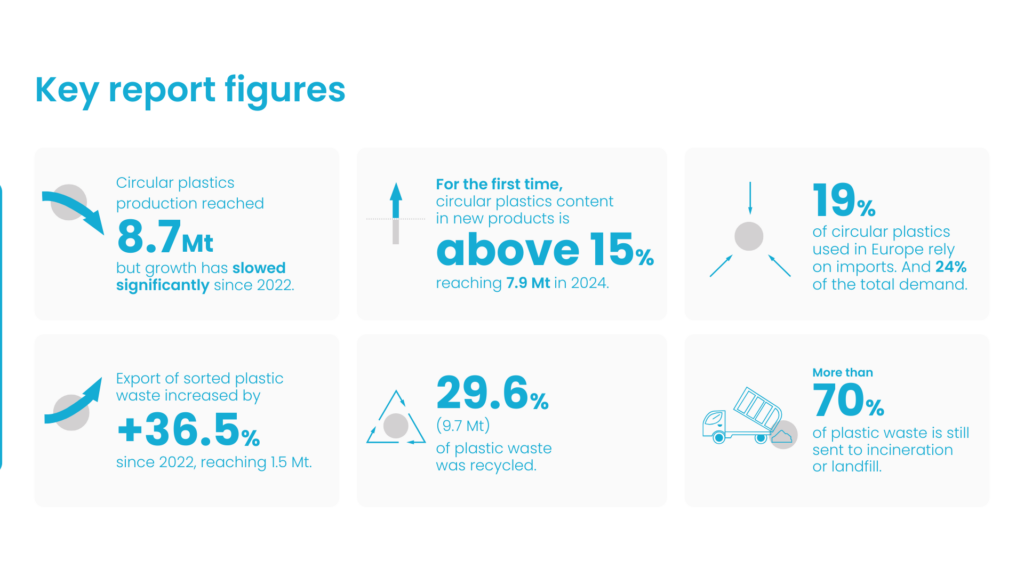
Against a backdrop of accelerating global circular plastics production, Europe’s annual growth in circular production has declined sharply from 13.6% in 2022 to only 1.2% in 2024.
Equally worrying, new data on trade also highlights the significant dependence of Europe’s plastics transition on external value chains, with 19% of converter demand for circular plastics met through imports and 12.4% of Europe’s collected waste recycled in other regions.
These trends undermine Europe’s climate ambitions and strategic autonomy.
Urgent action is needed at EU and national levels to restore industry’s competitiveness and unlock investment in circular plastics at scale.
At a glance: The Circular Economy for Plastics 2026
Circular Economy for Plastics 2026 Takeaways
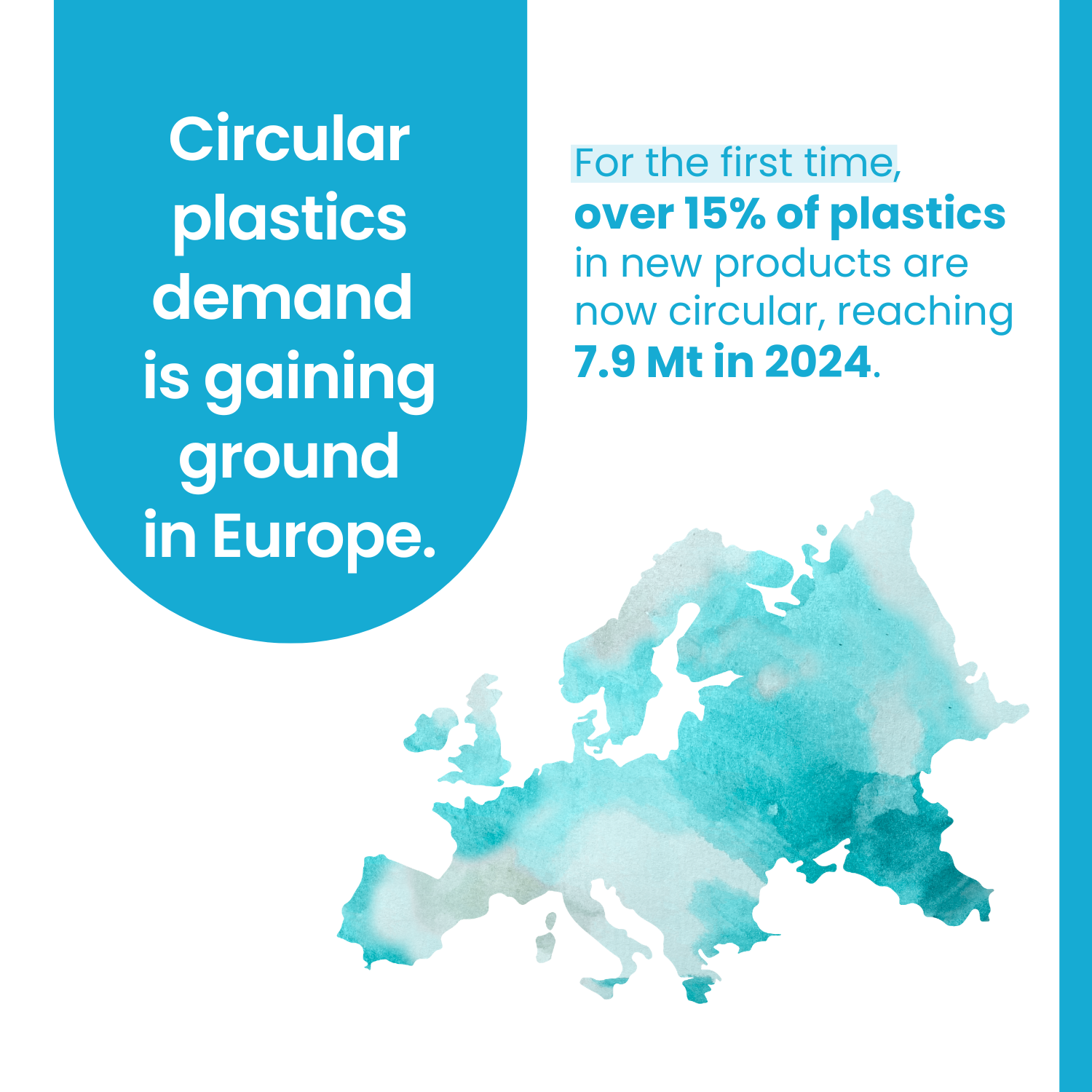
The Circular Economy for Plastics 2026 report data shows we have reached a significant milestone, but one that reflects declining fossil production as much as real growth in circularity.
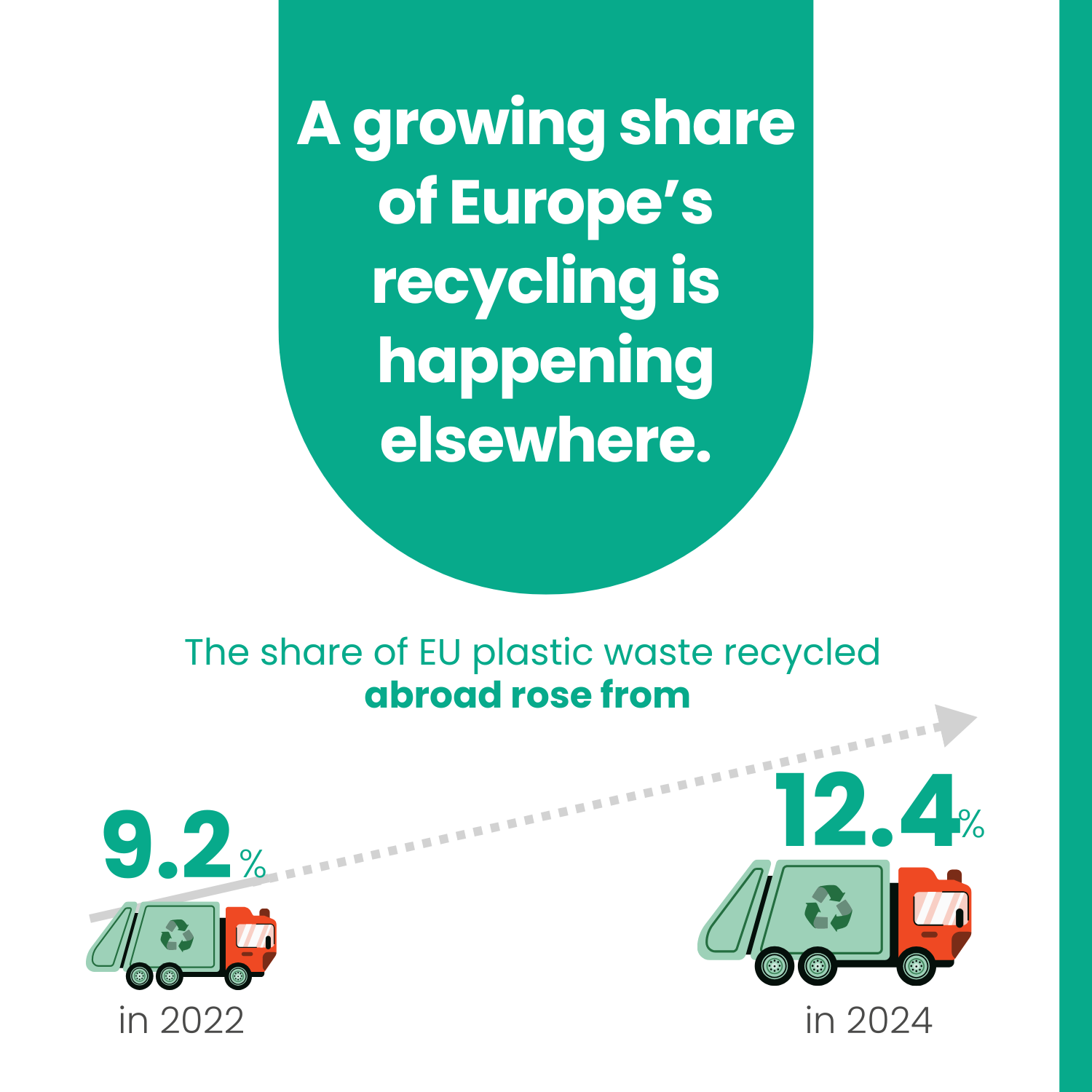
This trend underlines the urgent need to scale up domestic recycling capacity and create the right market conditions in Europe.
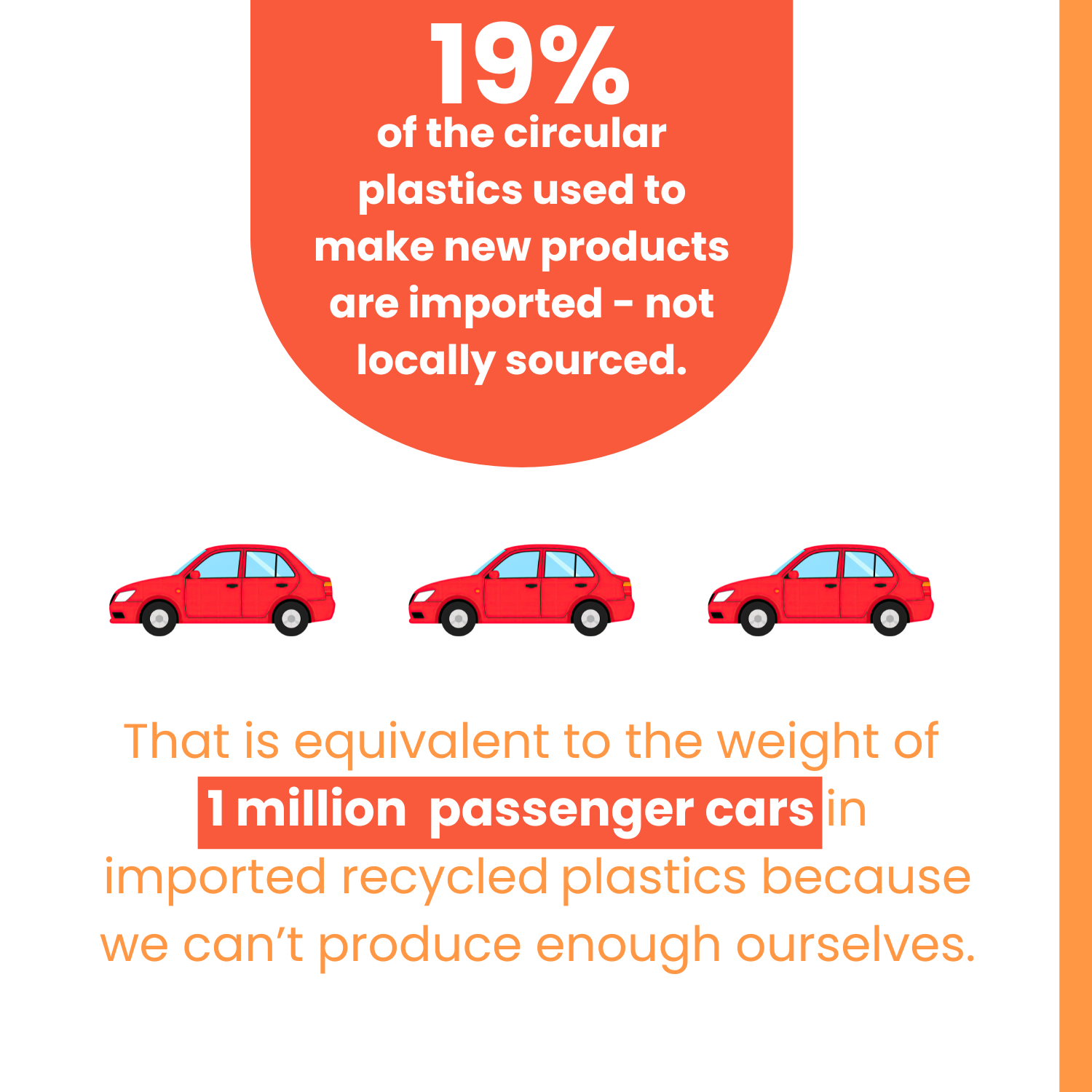
Instead of becoming a valuable resource for Europe’s circular economy, this material is leaving the continent, making us more dependent on imports. Keeping waste in Europe means having strategic autonomy as well as keeping value, jobs, and innovation in Europe.
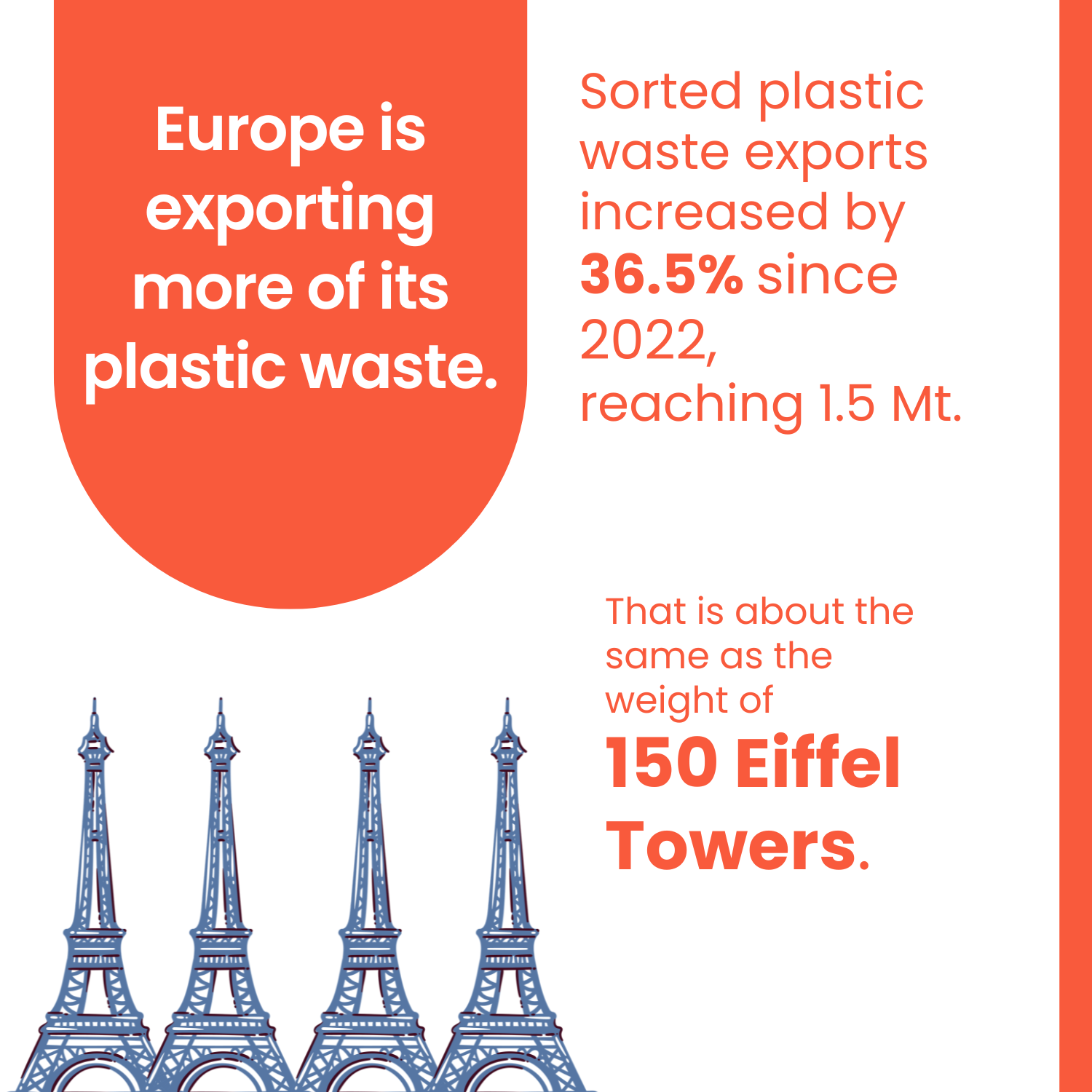
This highlights a growing gap between demand and domestic supply, and a missed opportunity to build a strong EU circular market.

“It is deeply concerning that, just when Europe should be accelerating the transition to a circular economy, we see a dramatic slowdown. As a result of high energy and feedstock prices, emissions costs and a lack of fair trade, Europe’s plastics manufacturers are in survival mode. Our value chain cannot make the necessary investments in circularity; instead, we are witnessing Europe’s decarbonisation through deindustrialisation. Unless this highly damaging trend is reversed, Europe will not be able to meet its climate ambitions.”
Rob Ingram – President of Plastics Europe and CEO of Ineos Olefins & Polymers Europe
About the report
This award-winning report is a contribution towards a better understanding of the circular economy for plastics and its evolution over the years.
Published every two years, it provides a data-driven overview of the European plastics system, covering conventional and circular production, use and end-of-life management. The 2026 edition analyses trends for the period 2022–2024 and, for the first time, examines new data, including trade flows of fossil-based and circular plastics, to provide a more complete picture of material flows in Europe.
Hungry for more data?
Check out our data hub: a centralised digital repository providing access to an extensive range of Plastics Europe’s reports and data-related resources.
“The Gulf crisis has reinforced how exposed Europe is to fossil-resource shocks, and that a strong European circular plastics economy is not a nice-to-have; it’s non-negotiable. Plastic waste is a valuable commodity which gives Europe the opportunity to be a resource-rich continent. It’s time to reclaim ownership of our circular economy, starting with keeping and using strategic resources in Europe.”
Virginia Janssens – Managing Director of Plastics Europe